About 222 minutes
Eskimo Folk-Tales — Text and Context
Folklore
50,920 recorded words. 0 minutes difference from this book's estimate.
View Gutenberg source #28932
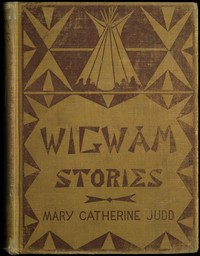
The source record for Wigwam stories told by North American Indians — Key Ideas to Explore measures this digital text at 51,009 words, 3 hr 42 min estimated reading time, and 47 detected text sections.
The text analysis averages about 14.3 words per sentence, while the detected sections provide another way to judge how the source is divided.
Project Gutenberg metadata also associates the work with “Indians of North America,” connecting these edition facts with the source record’s subject description.
Explore this collection
These alternatives are selected using recorded categories and estimated reading time.
About 222 minutes
Folklore
50,920 recorded words. 0 minutes difference from this book's estimate.
View Gutenberg source #28932About 226 minutes
Folklore
51,906 recorded words. 4 minutes difference from this book's estimate.
View Gutenberg source #11014About 227 minutes
Folklore
52,126 recorded words. 5 minutes difference from this book's estimate.
View Gutenberg source #53617Search stored excerpts and compare books → Choose by your preferences →
Choices use stored catalog measurements. Estimates vary with reading speed. A shared category is a catalog label, not a claim that two books have the same argument or literary quality.
Search reads excerpt text stored with this catalog and links to its associated Gutenberg record. The connection is stored in the site database; this tool does not recheck that every excerpt is word-for-word identical to that external record. Excerpt search does not cover every chapter and does not verify historical publication dates.
Catalog snapshot checked: 2026-09-26. Coverage: 97 public books, 97 available source excerpts.
Calculated from edition completeness, EPUB availability, text structure and catalogue metadata. Not a user rating.
Total of 100 points, scaled to a 2.5-5.0 range. Editions with an empty description or a missing EPUB file are not scored.
Public-domain source text
The source text is kept in the dedicated reader, separate from this catalogue record and its commentary.
Mary Catherine Judd's 1901 compilation draws directly from sources such as Schoolcraft's writings, avoiding adaptations of Longfellow's Hiawatha. The preface notes that the Chippewa figure Menabozho, or "The Foolish One," remains central to tales gathered as late as 1900. The collection's narrative voice alternates between matter-of-fact reportage—as when a father "gave back his gifts to the war chief" after a disappearance—and lyrical passages that slow the pace, such as the description of a path "covered with flowers" leading to a lodge. These shifts in tempo create a distinctive reading experience.
The compiler's prose often moves with a plain, almost documentary cadence. In "The White Stone Canoe," the young chief's grief is stated bluntly: "There was no more peace for him from that hour." Yet the same story later adopts a measured, ceremonial tone when the old chief says, "I have expected you." This juxtaposition of direct statement and formal dialogue recurs throughout. The tale of Leelinaw similarly blends factual details—"She took some wild rice in her hand"—with the supernatural transformation into pine trees. The narrative voice rarely editorializes; it lets the events speak, which can make the shift from ordinary to extraordinary feel abrupt. Readers may notice how the compiler's restraint in commentary heightens the strangeness of the legends.
Changes in pace are often achieved through repetition of structural elements. In "The White Stone Canoe," the hero's journey is marked by repeated phrases: "He went on," "he knew," "he saw." This creates a rhythmic, almost incantatory forward motion. Conversely, the Leelinaw story slows with descriptive pauses: "The gentle voice of the leaves comforted Leelinaw." The compiler also uses catalog-like lists—"Hills, valleys, forests, and rivers"—to stretch time within a sentence. These techniques give the prose a variable tempo that mirrors oral storytelling, where a teller might linger on a detail or accelerate through a sequence. The effect is a reading experience that feels guided by an unseen narrator's breath.
Landscape descriptions often signal a change in pace or mode. In the Chippewa journey tale, the transition from "snow piled thick" to "the land of spring" is abrupt, marking a passage from the mundane to the mythic. The setting itself becomes a character: the "Big Sea Water" in Leelinaw's story is a constant presence, and the appearance of "two tall pines" where the lovers stood literalizes the shift from human to natural world. Judd's descriptions are economical—"a field of blue was over his head, and a field of green was at his feet"—but they carry weight. Readers attuned to these environmental cues will find that the stories' emotional and narrative pivots often coincide with a change in the weather or terrain.
Because the excerpts represent only a fraction of the forty-seven text sections, the patterns observed here may not hold across the entire volume. Readers are encouraged to track how Judd handles the transition between tales from different tribes—whether the voice remains consistent or adapts. The illustrations by Angel de Cora, mentioned in the preface, may also influence the pacing of the reading experience, though they are not reproduced in this digital edition.
Sometimes the quiet shift in those Wigwam Stories—the way a mythic moment suddenly becomes a simple, human detail—reminds me of the same gentle rhythm I found later in Pele and Hiiaka: A Myth From Hawaii — Story, Setting & Ideas. Both felt less like telling and more like listening, the pacing breathing like someone remembering aloud. I still carry that feeling with me.
A brief reflection can help important ideas stay with you longer.