About 276 minutes
Legends and tales of the Harz Mountains — Themes and Context
Fantasy Classics
63,261 recorded words. 14 minutes difference from this book's estimate.
View Gutenberg source #74323
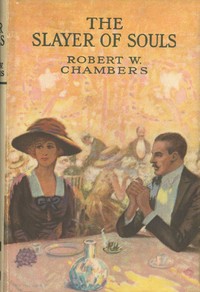
Before opening The Slayer of Souls — Edition Insights, the edition data offers a quick orientation: 66,652 words, 4 hr 50 min estimated reading time, and 7 detected text sections.
The text analysis averages about 14.1 words per sentence, while the detected sections provide another way to judge how the source is divided.
Project Gutenberg metadata also associates the work with “Fantasy fiction,” connecting these edition facts with the source record’s subject description.
Explore this collection
These alternatives are selected using recorded categories and estimated reading time.
About 276 minutes
Fantasy Classics
63,261 recorded words. 14 minutes difference from this book's estimate.
View Gutenberg source #74323About 265 minutes
Fantasy Classics
60,791 recorded words. 25 minutes difference from this book's estimate.
View Gutenberg source #58913About 322 minutes
Fantasy Classics
73,948 recorded words. 32 minutes difference from this book's estimate.
View Gutenberg source #22886Search stored excerpts and compare books → Choose by your preferences →
Choices use stored catalog measurements. Estimates vary with reading speed. A shared category is a catalog label, not a claim that two books have the same argument or literary quality.
Search reads excerpt text stored with this catalog and links to its associated Gutenberg record. The connection is stored in the site database; this tool does not recheck that every excerpt is word-for-word identical to that external record. Excerpt search does not cover every chapter and does not verify historical publication dates.
Catalog snapshot checked: 2026-09-26. Coverage: 97 public books, 97 available source excerpts.
Calculated from edition completeness, EPUB availability, text structure and catalogue metadata. Not a user rating.
Total of 100 points, scaled to a 2.5-5.0 range. Editions with an empty description or a missing EPUB file are not scored.
Public-domain source text
The source text is kept in the dedicated reader, separate from this catalogue record and its commentary.
From its first sentence, The Slayer of Souls establishes a heroine defined by a "terrible sense of foreboding" and a "subconsciousness of supreme evil" that has haunted her for four years. Robert W. Chambers builds the narrative around Tressa Norne's internal experience, rendering her psychic trauma through physical details—the receding Korean shore, the "silver-fox furs," the "smart little hat" that mark her as an American abroad. The prose oscillates between concrete observation and metaphysical dread, as when Asia dissolves "to a streak of vapour in the misty lustre of the moon." This opening sequence, free of exposition, immerses the reader in a consciousness that cannot distinguish between spiritual bondage and soul-destruction, a ambiguity that drives the novel's central conflict.
Chambers selects words that blur the line between psychological and supernatural horror. Tressa's fear is not merely described but embodied in verbs like "subside" and "dissolve," and in the repeated motif of "nightmare" as both memory and ongoing condition. The phrase "accursed nightmare which had possessed her" uses possessed with deliberate ambiguity—is it a metaphor or a literal claim? Similarly, the dialogue among the men—Benton, Recklow, Cleves—employs clinical terms like "psychic forces" and "clairvoyantly," grounding the fantastic in a quasi-scientific register. This diction choice creates a tone of rational men confronting irrational evil, a tension that pervades the excerpts.
Tressa's voice shifts between fragile uncertainty and stark declaration. When she says, "I am—I seem to be—a trifle dazed," the dashes mimic a faltering consciousness. Later, she repeats "I saw Sanang" with flat finality, as though reporting a fact she cannot explain. Chambers contrasts her hesitant speech with the men's blunt, formal exchanges—"Have you anything to report, Cleves?"—highlighting her isolation even among allies. The narrative voice itself mirrors this split: third-person omniscient yet tethered to Tressa's perceptions, as when it notes her "sad eyes fixed on the misty East." This focalization keeps the reader inside her uncertainty about whether her soul was "only held in bondage" or "irrevocably destroyed."
The excerpts reveal a pattern of withheld information and delayed disclosure. The opening chapter withholds the nature of the "supreme evil" until Tressa's conversation with Recklow, where she admits she saw Sanang "clairvoyantly." Chambers structures scenes around these moments of reluctant revelation: Tressa "shrink[s] back in her chair" before speaking, and Cleves must prompt her. The men's dialogue then explicates what she cannot articulate, as when Recklow describes her using "powers natural to her but unfamiliar to us." This structure—private dread, public confession, male interpretation—creates a rhythm of intimacy and exposition, leaving the reader to gauge how much of the horror is external and how much is projected.
Chambers weaves subtle motifs that accumulate meaning. The moon appears twice in the excerpts: first as a "misty lustre" over Asia, then as a "full June moon" that "stared through the open windows—searching for the traditional bride, perhaps." This personification links lunar light to surveillance and lost innocence. Tressa's "narrow, sun-tanned hand" is noted when she greets the men, a physical detail that contrasts with her "pale and lovely" ghostlike appearance. Her eyes "steal sideways toward her husband" during conversation, a gesture that conveys both dependence and hidden knowledge. These recurring details—moon, hand, sideways gaze—anchor the supernatural in the sensory, making the uncanny feel tactile.
The conversations among the male characters serve as a forum for debating the nature of Tressa's powers. Selden states flatly, "We are utterly helpless against unknown psychic forces," while Benton calls her knowledge "terrible" and "horrible to use." This dialogue externalizes the novel's central question: is Tressa a savior or a damned soul? Recklow's speech about her "dauntless bravery" and belief that "her soul is damned" encapsulates the paradox. Chambers uses these exchanges not to resolve the ambiguity but to deepen it, as each man's opinion reflects his own worldview. The reader is left to weigh the evidence—her clairvoyant sightings, her physical frailty, her husband's protective silence—without a definitive answer.
Readers attentive to Chambers's craft will notice how he uses the gap between what Tressa knows and what she says to generate suspense. The excerpts offer no resolution to the question of soul-destruction, only the steady accumulation of psychic evidence. Pay particular attention to the moments when the narrative shifts from external description to internal sensation—the line between the two is where the novel's horror resides. The men's rational frameworks may comfort them, but the prose remains anchored in Tressa's haunted perception, inviting the reader to share her uncertainty.
There’s a particular ache in Chambers’s psychic battles—that sense of old, half-remembered things pulling at the edges of a modern world. It reminds me of the quieter dread I felt reading the collected mountain legends in Allegheny Episodes Folk Lore and Legends Collected in Northern and Western Pennsylvania — Context and Discussion, where the hills themselves seem to keep a stubborn, whispered history. Both feel like faint echoes from somewhere just past the firelight.
Your answers remain private and are stored only in this browser.