About 265 minutes
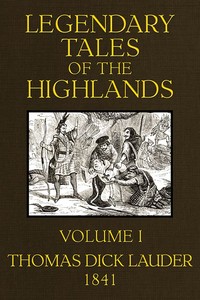
Legendary Tales of the Highlands (Volume 1 of 3) A sequel to Highland Rambles — Key Ideas to Explore
Fantasy Classics
60,791 recorded words. 11 minutes difference from this book's estimate.
View Gutenberg source #58913
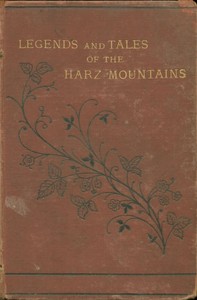
This digital edition of Legends and tales of the Harz Mountains — Themes and Context is described by source-level measurements including 63,261 words, 4 hr 36 min estimated reading time, and 7 detected text sections.
The text analysis averages about 21.0 words per sentence, while the detected sections provide another way to judge how the source is divided.
Project Gutenberg metadata also associates the work with “Legends -- Germany -- Harz Mountains,” connecting these edition facts with the source record’s subject description.
Explore this collection
These alternatives are selected using recorded categories and estimated reading time.
About 265 minutes
Fantasy Classics
60,791 recorded words. 11 minutes difference from this book's estimate.
View Gutenberg source #58913About 290 minutes
Fantasy Classics
66,652 recorded words. 14 minutes difference from this book's estimate.
View Gutenberg source #36281About 241 minutes
Fantasy Classics
55,371 recorded words. 35 minutes difference from this book's estimate.
View Gutenberg source #35577Search stored excerpts and compare books → Choose by your preferences →
Choices use stored catalog measurements. Estimates vary with reading speed. A shared category is a catalog label, not a claim that two books have the same argument or literary quality.
Search reads excerpt text stored with this catalog and links to its associated Gutenberg record. The connection is stored in the site database; this tool does not recheck that every excerpt is word-for-word identical to that external record. Excerpt search does not cover every chapter and does not verify historical publication dates.
Catalog snapshot checked: 2026-09-26. Coverage: 97 public books, 97 available source excerpts.
Calculated from edition completeness, EPUB availability, text structure and catalogue metadata. Not a user rating.
Total of 100 points, scaled to a 2.5-5.0 range. Editions with an empty description or a missing EPUB file are not scored.
Public-domain source text
The source text is kept in the dedicated reader, separate from this catalogue record and its commentary.
Toofie Lauder's Legends and Tales of the Harz Mountains (1881) presents over sixty narratives drawn from German folklore, each tied to a specific location in the Harz region. The collection opens with the story of Brunhilda and the Rosstrappe, a tale of a princess, a suitor, and a giant horse's footprint etched in stone—a motif that recurs throughout the volume as landmarks are given legendary origins. Lauder's prose shifts noticeably between tales: some unfold with brisk, almost novelistic pacing, while others adopt a more deliberate, moralizing tone. The excerpts reveal a fondness for dialogue and council scenes, as in the story of Graf Arno, where the Bürgermeister's comically cautious oratory contrasts with the bridegroom's decisive action. This variation in narrative voice and tempo is a defining feature of the collection.
Lauder frequently modulates her storytelling register. In the legend of Graf Arno, the council chamber scene is rendered with ironic detachment: the Bürgermeister's speech is punctuated by the assembly's echoing assent—"How wise! how mild!"—creating a satirical portrait of civic indecision. This comic tone is absent from more somber tales, such as "The Pebble," where the prose becomes plainer and more sentimental, focusing on an old man's poverty and virtue. The juxtaposition suggests that Lauder tailored her voice to the moral or emotional arc of each legend, rather than imposing a uniform style.
The collection's pacing varies markedly. Some legends, like the Rosstrappe, unfold over several paragraphs of exposition and dialogue, building toward a dramatic resolution. Others, such as the brief account of the ghostly monk who appears every seven years, are compressed into a few lines of summary. Lauder also intersperses longer tales with shorter anecdotal pieces, creating a rhythm that prevents monotony. The excerpt from "Graf Arno's Capture" demonstrates a shift from leisurely council debate to rapid action—the disguised bridegroom's plan unfolds in a single paragraph—showing how Lauder accelerates the pace at key moments.
Across the excerpts, certain motifs recur: enchanted maidens, ghostly knights, and moral tests involving greed or cruelty. The spinner of the Arnstein, doomed to spin until her web breaks, echoes the broader theme of supernatural punishment. Each legend is firmly anchored to a specific Harz location—the Rosstrappe, the Arnstein, the Dance meadow—giving the collection a topographical coherence. Lauder often concludes with a note about the site's present-day name or a surviving relic, such as the cage still shown in Aschersleben. This grounding in real places lends the fantastic elements a documentary weight, inviting readers to imagine the landscape as a palimpsest of legend.
Readers approaching Legends and Tales of the Harz Mountains will find a work that rewards attention to its shifts in tone and pace. Lauder's prose, while consistently clear, adapts to the demands of each story—sometimes wry, sometimes earnest. The collection is best enjoyed not as a single narrative but as a series of distinct performances, each keyed to a different folkloric register. Paying attention to how Lauder handles dialogue, description, and moral commentary will reveal the craft behind these apparently simple tales.
In Legends and Tales of the Harz Mountains, I often pause on those quiet fairy-women who wait beside cold springs, expecting no one truly. That patient loneliness reminds me of a similar hush I found leafing through Eastern Tales by Many Story Tellers — Key Ideas to Explore, where distant voices also sigh over vanished thresholds. Both shelves keep such tender, unresolved echoes, side by side in my memory.
Create a short personal record of your experience with this book.