About 265 minutes
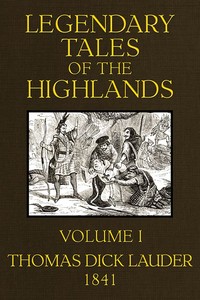
Legendary Tales of the Highlands (Volume 1 of 3) A sequel to Highland Rambles — Key Ideas to Explore
Fantasy Classics
60,791 recorded words. 24 minutes difference from this book's estimate.
View Gutenberg source #58913
The catalog record for Caucasian Legends — Inside the Classic provides practical reading context through 55,371 words, 4 hr 1 min estimated reading time, and 7 detected text sections.
The text analysis averages about 24.9 words per sentence, while the detected sections provide another way to judge how the source is divided.
Project Gutenberg metadata also associates the work with “Legends -- Caucasus,” connecting these edition facts with the source record’s subject description.
Explore this collection
These alternatives are selected using recorded categories and estimated reading time.
About 265 minutes
Fantasy Classics
60,791 recorded words. 24 minutes difference from this book's estimate.
View Gutenberg source #58913About 207 minutes
Fantasy Classics
47,385 recorded words. 34 minutes difference from this book's estimate.
View Gutenberg source #17071About 276 minutes
Fantasy Classics
63,261 recorded words. 35 minutes difference from this book's estimate.
View Gutenberg source #74323Search stored excerpts and compare books → Choose by your preferences →
Choices use stored catalog measurements. Estimates vary with reading speed. A shared category is a catalog label, not a claim that two books have the same argument or literary quality.
Search reads excerpt text stored with this catalog and links to its associated Gutenberg record. The connection is stored in the site database; this tool does not recheck that every excerpt is word-for-word identical to that external record. Excerpt search does not cover every chapter and does not verify historical publication dates.
Catalog snapshot checked: 2026-09-26. Coverage: 97 public books, 97 available source excerpts.
Calculated from edition completeness, EPUB availability, text structure and catalogue metadata. Not a user rating.
Total of 100 points, scaled to a 2.5-5.0 range. Editions with an empty description or a missing EPUB file are not scored.
Public-domain source text
The source text is kept in the dedicated reader, separate from this catalogue record and its commentary.
The translator's preface to Caucasian Legends frames the collection within a specific political and religious narrative, describing Georgians as a "nation of chivalry and heroism" and emphasizing their Christian identity amidst "wild and fanatic Mahometan tribes." This framing sets a tone of moral and cultural contrast that permeates the legends themselves. The excerpts reveal a consistent authorial choice: a formal, almost archaic diction that mirrors the translator's own elevated style. Phrases such as "thou didst darken it" and "thy all powerful type" suggest a deliberate effort to evoke a chivalric past, blending biblical cadences with romanticized speech.
The language of the excerpts is consistently elevated, employing second-person singular pronouns ("thee," "thou," "thy") and inversions like "doth not come within thy reach." This register aligns with the translator's characterization of Georgians as a "nation of chivalry." The dialogue of Sagdoukta, for instance, uses elaborate compliments: "Thou hast wonderful beauty, common sense, mind, strength, and bravery." Such phrasing is not merely decorative; it establishes a formal, almost ritualistic mode of address that distances the characters from everyday speech. The narrator also adopts this register, describing Mirdat's "hero-prince’s heart" and the "deep, deep grief" in his soul. This consistent diction creates a unified voice that blends historical chronicle with romantic legend.
Direct speech in the excerpts serves as the primary vehicle for emotional intensity. Sagdoukta's plea to Mirdat is a sustained, lyrical monologue that reveals her inner conflict: she admires her father's conqueror while begging him to spare her father. Her words shift from praise ("Thy powerful army defeats and submits even hero princes") to reproach ("O do not tear him away from me!"). The use of ellipses and dashes in the translation suggests pauses and emotional breaks. Mirdat's response—"There will be no duel!"—is abrupt, contrasting with her flowery speech. This juxtaposition highlights his internal turmoil, described as "deep, deep grief and depression." The dialogue thus functions not just to advance plot but to expose character psychology through rhetorical contrast.
Descriptive passages in the excerpts blend natural and supernatural elements. The moonlit scene of Sagdoukta on the tower is rendered with sensory detail: "the moon was shining on her and gave her long, regular features some secret mysteriousness and unusual charm." The description of her voice as "low, inspiring and enchanting" and her mouth as "coral" emphasizes an idealized, almost fairy-tale beauty. Similarly, the narrator notes the "grassy slopes" and the "abandoned tower," grounding the romance in a specific, rugged landscape. This combination of precise setting and idealized description reflects the translator's effort to evoke a Caucasus that is both historically real and mythically resonant. The landscape itself becomes a stage for chivalric action and emotional revelation.
The excerpts reveal a narrative technique that embeds historical context within romantic episodes. The translator's preface provides a political frame, but the legends themselves weave historical details—such as the annexation of provinces and the role of the Shah—into personal stories. The tale of Mirdat and Sagdoukta is interrupted by a digression on the history of Ranna, Movakanne, and Aderbadaganne, which "since the most remote times belonged to Georgia." This structure suggests that the legends function as both entertainment and cultural memory. The narrator's aside, "It is not useless to relate what happened to Mirdat," signals a deliberate intertwining of romance and history. The reader is thus invited to see personal conflicts as reflections of larger geopolitical struggles.
Readers approaching Caucasian Legends should attend to the translator's voice as much as the tales themselves. The preface's political framing and the ornate diction of the legends are not incidental; they shape how the stories are told and what they are meant to convey. The excerpts suggest a work that is as much about constructing a national identity as about entertaining with romance and adventure. Noting the interplay between formal language, emotional dialogue, and historical digression will enrich the reading experience.
Years among these shelves taught me how a translator’s voice can echo a land’s very soul—the ornate chivalry of those Caucasus tales feels like a whispered oath. It stirs the same quiet warmth I find in Folk-Lore and Legends: Scotland — Reading Companion, where rugged hills speak in their own dialect of longing. Two distant mountain peoples, bound by the grammar of remembrance.
Answer a few questions and save a private reflection on this device.