About 103 minutes
Fairy Realm: A Collection of the Favourite Old Tales Told in Verse — A Reader’s Guide
Fairy Tales
23,620 recorded words. 21 minutes difference from this book's estimate.
View Gutenberg source #44447
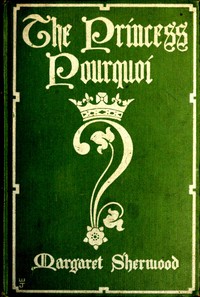
For The Princess Pourquoi — A Reader’s Guide, the stored edition analysis reports 28,308 words, 2 hr 4 min estimated reading time, and 4 detected text sections.
The text analysis averages about 20.6 words per sentence, while the detected sections provide another way to judge how the source is divided.
Project Gutenberg metadata also associates the work with “Fairy tales,” connecting these edition facts with the source record’s subject description.
Explore this collection
These alternatives are selected using recorded categories and estimated reading time.
About 103 minutes
Fairy Tales
23,620 recorded words. 21 minutes difference from this book's estimate.
View Gutenberg source #44447About 81 minutes
Fairy Tales
18,525 recorded words. 43 minutes difference from this book's estimate.
View Gutenberg source #46338About 191 minutes
Fairy Tales
43,707 recorded words. 67 minutes difference from this book's estimate.
View Gutenberg source #52309Search stored excerpts and compare books → Choose by your preferences →
Choices use stored catalog measurements. Estimates vary with reading speed. A shared category is a catalog label, not a claim that two books have the same argument or literary quality.
Search reads excerpt text stored with this catalog and links to its associated Gutenberg record. The connection is stored in the site database; this tool does not recheck that every excerpt is word-for-word identical to that external record. Excerpt search does not cover every chapter and does not verify historical publication dates.
Catalog snapshot checked: 2026-09-26. Coverage: 97 public books, 97 available source excerpts.
Calculated from edition completeness, EPUB availability, text structure and catalogue metadata. Not a user rating.
Total of 100 points, scaled to a 2.5-5.0 range. Editions with an empty description or a missing EPUB file are not scored.
Public-domain source text
The source text is kept in the dedicated reader, separate from this catalogue record and its commentary.
The title story of Margaret Sherwood's 1907 collection opens with a familiar fairy-tale scene—a christening feast—but quickly veers into the unexpected. A fairy curses the newborn princess not with death or sleep, but with a mind, declaring, 'She is a woman-child, and yet she shall think.' The king groans, the queen moans, and the reader is tipped off that this is no ordinary kingdom. Sherwood uses the trappings of traditional fantasy to stage quiet rebellions: princesses who wear chainmail, ask pointed questions, and prefer action to embroidery. The five tales collected here originally appeared in Scribner's Magazine, the Atlantic Monthly, and McClure's Magazine, and they share a wry, ironic tone that gently mocks courtly conventions while still delivering adventure.
In 'The Princess Pourquoi,' Princess Victorine dons a 'skirt of chain armor' and goes hunting a monster, only to find that the line between beast and knight is blurry. When she meets a wounded knight who claims he was attacked from behind, she fails to connect his injury to the monster she killed—a detail Sherwood underscores with the narrator's dry remark: 'One of her greatest charms was her slowness in putting two and two together.' The story plays with perspective: the knight's helmet gleams in the sunlight, the fog obscures combat, and the princess's triumph is undercut by the possibility that she may have wounded her own ally. Sherwood refuses to resolve the ambiguity, leaving the reader to wonder who—or what—the real monster was.
The second tale introduces a necromancer whose powers are less about raising the dead and more about manipulating perception. Sherwood's magic is never straightforward; it operates through loopholes and misunderstandings. The necromancer's cleverness lies not in spells but in exploiting the assumptions of those around him. This story, like the others, treats magic as a tool for social commentary rather than spectacle. The narrator's tone remains detached, almost clinical, as if observing a scientific experiment in human folly. The necromancer's tricks expose the vanity and greed of the court, but Sherwood stops short of moralizing—she lets the absurdity speak for itself.
Perhaps the most striking juxtaposition in the collection is 'The Princess and the Microbe,' which brings germ theory into a fantasy setting. A princess falls ill, and the court's usual remedies fail; the culprit is a microscopic invader. Sherwood grafts scientific language onto the fairy-tale structure, creating a hybrid that feels both modern and archaic. The microbe is described with the same narrative gravity as a dragon, yet it cannot be slain with a sword. This story highlights Sherwood's interest in the tension between old and new knowledge—a theme that runs through the entire collection. The princess's recovery depends not on magic but on observation and hygiene, a quiet endorsement of reason over superstition.
Readers approaching The Princess Pourquoi should expect not a single sustained narrative but five distinct experiments in genre bending. Sherwood's prose is precise and understated, often letting irony do the work of overt commentary. Pay attention to what the characters fail to notice—the gaps in their understanding are where the stories' real action lies. The collection rewards those who read between the lines of its courtly dialogues and who appreciate a fairy tale that trusts its audience to catch the joke.
Margaret Sherwood’s princesses stayed with me because they question everything—even their own curse. Reading her made me think of that old crab in Battle of the Monkey & the Crab — Key Ideas to Explore, whose quiet cunning feels like its own kind of armor. The same stubborn thoughtfulness lingers, unhurried and soft. Like a memory of childhood questions.
A brief reflection can help important ideas stay with you longer.