About 17 minutes
The Adventures of Puss in Boots Marks's Edition — Reading Notes
Fairy Tales
3,817 recorded words. 9 minutes difference from this book's estimate.
View Gutenberg source #37529
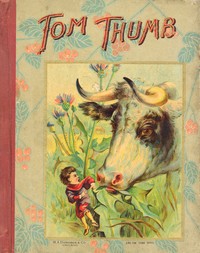
The catalog record for The History of Tom Thumb and Other Stories. — A Reader’s Guide provides practical reading context through 5,757 words, 26 min estimated reading time, and 8 detected text sections.
The text analysis averages about 23.6 words per sentence, while the detected sections provide another way to judge how the source is divided.
Project Gutenberg metadata also associates the work with “Fairy tales,” connecting these edition facts with the source record’s subject description.
Explore this collection
These alternatives are selected using recorded categories and estimated reading time.
About 17 minutes
Fairy Tales
3,817 recorded words. 9 minutes difference from this book's estimate.
View Gutenberg source #37529About 16 minutes
Fairy Tales
3,611 recorded words. 10 minutes difference from this book's estimate.
View Gutenberg source #25021About 81 minutes
Fairy Tales
18,525 recorded words. 55 minutes difference from this book's estimate.
View Gutenberg source #46338Search stored excerpts and compare books → Choose by your preferences →
Choices use stored catalog measurements. Estimates vary with reading speed. A shared category is a catalog label, not a claim that two books have the same argument or literary quality.
Search reads excerpt text stored with this catalog and links to its associated Gutenberg record. The connection is stored in the site database; this tool does not recheck that every excerpt is word-for-word identical to that external record. Excerpt search does not cover every chapter and does not verify historical publication dates.
Catalog snapshot checked: 2026-09-26. Coverage: 97 public books, 97 available source excerpts.
Calculated from edition completeness, EPUB availability, text structure and catalogue metadata. Not a user rating.
Total of 100 points, scaled to a 2.5-5.0 range. Editions with an empty description or a missing EPUB file are not scored.
Public-domain source text
The source text is kept in the dedicated reader, separate from this catalogue record and its commentary.
The opening of The History of Tom Thumb establishes a world where fairy-tale logic and everyday domesticity collide. Merlin, the famous enchanter, stops at a ploughman's cottage and is struck by the couple's sorrow over their childlessness. The wife's wish—for a son "no bigger than his father's thumb"—is treated with amusement by Merlin, who then enlists the Queen of the Fairies to grant it. This origin blends Arthurian legend with folk motifs, setting the stage for a hero whose tiny size becomes both his defining trait and the source of his troubles.
Tom Thumb's diminutive stature is not merely a curiosity; it drives the plot through a series of physical mishaps. After falling into a batter pudding, he is stirred in and boiled, then given to a tinker. Later, he is swallowed by a cow and rescued by a doctor who administers a purgative. These episodes treat the body as a site of slapstick vulnerability. The narrative voice remains matter-of-fact, even as Tom endures being bruised by cherry stones or nearly drowned in batter. The humor arises from the contrast between the ordinary domestic setting—a kitchen, a field—and the extraordinary predicaments that a thumb-sized boy faces. The text does not moralize heavily about these dangers; instead, it presents them as inevitable consequences of Tom's size and his curiosity.
Tom is introduced as "cunning and sly," and his early theft of cherry stones earns him a beating inside a bag. Yet the story does not consistently frame him as a cautionary figure. His mother fails to correct him, and his punishments often seem disproportionate or accidental. When he is boiled in a pudding, it is his mother's oversight, not his own misdeed, that causes the crisis. The tinker who receives the pudding is an unwitting agent of rescue. This pattern suggests a world where cause and effect are loosely connected, and where a child's mischief is met with chaotic, sometimes absurd consequences. The final story in the collection, about a selfish chick who pecks others off the roost, offers a more straightforward moral, but Tom's own tale resists easy judgment.
The narrative repeatedly transforms familiar household items into threats. A wooden bowl, a batter bowl, a pudding pot, a bag of cherry stones, and a cow's stomach all become traps or vessels of peril. These objects are described with precise, homely detail: the milk is served "in a wooden bowl," the bread on "a wooden platter." The story's setting is firmly rooted in the material culture of a pre-industrial English cottage. Tom's adventures are not set in a magical realm but in the kitchen, the barn, and the road. This grounding in the everyday makes his escapes all the more remarkable, as he navigates a world scaled for giants. The illustrations mentioned on the title page likely reinforced this contrast between tiny hero and oversized surroundings.
Readers approaching this collection should expect a narrative that moves quickly from one scrape to the next, with little psychological depth but considerable inventive energy. The stories reward attention to the physical details of Tom's world—the size of a cherry stone, the heat of a pudding pot—and the deadpan tone with which his misfortunes are recounted. The volume also includes other tales, which may offer further variations on the themes of smallness, cleverness, and survival.
I found myself thinking of that old Tom Thumb reader, with its tidy moral lessons, while leafing through Supplemental Nights to the Book of the Thousand and One Nights — Volume 3 (of 6) Part 2 — Text and Context. Both feel like whispered stories meant for a quiet lamplight, though the latter wanders far darker and stranger paths, its wonders less a pudding and more a labyrinth.
Your answers remain private and are stored only in this browser.