About 520 minutes
Revolutionary Reader: Reminiscences and Indian Legends — A Closer Reading
Folklore
119,545 recorded words. 16 minutes difference from this book's estimate.
View Gutenberg source #46400
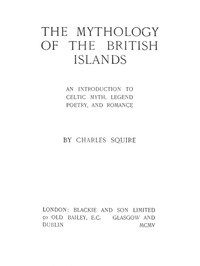
The Mythology of the British Islands An Introduction to Celtic Myth, Legend, Poetry, and Romance — Key Ideas to Explore can be approached with a clearer sense of reading commitment from its source measurements: 123,158 words, 8 hr 56 min estimated reading time, and 43 detected text sections.
The text analysis averages about 18.5 words per sentence, while the detected sections provide another way to judge how the source is divided.
Project Gutenberg metadata also associates the work with “Celts -- Folklore,” connecting these edition facts with the source record’s subject description.
Explore this collection
These alternatives are selected using recorded categories and estimated reading time.
About 520 minutes
Folklore
119,545 recorded words. 16 minutes difference from this book's estimate.
View Gutenberg source #46400About 513 minutes
Folklore
117,763 recorded words. 23 minutes difference from this book's estimate.
View Gutenberg source #43059About 491 minutes
Folklore
112,896 recorded words. 45 minutes difference from this book's estimate.
View Gutenberg source #49872Search stored excerpts and compare books → Choose by your preferences →
Choices use stored catalog measurements. Estimates vary with reading speed. A shared category is a catalog label, not a claim that two books have the same argument or literary quality.
Search reads excerpt text stored with this catalog and links to its associated Gutenberg record. The connection is stored in the site database; this tool does not recheck that every excerpt is word-for-word identical to that external record. Excerpt search does not cover every chapter and does not verify historical publication dates.
Catalog snapshot checked: 2026-09-26. Coverage: 97 public books, 97 available source excerpts.
Calculated from edition completeness, EPUB availability, text structure and catalogue metadata. Not a user rating.
Total of 100 points, scaled to a 2.5-5.0 range. Editions with an empty description or a missing EPUB file are not scored.
Public-domain source text
The source text is kept in the dedicated reader, separate from this catalogue record and its commentary.
Charles Squire's 1905 volume presents itself as a synthetic introduction to Celtic mythology for the English reader, drawing together Gaelic and British traditions into a single narrative. The preface explicitly frames the work as a remedy to the fragmented state of available translations, aiming to provide context for figures who otherwise appear "isolated and unexplained." Squire's method is comparative throughout: he aligns the Welsh Creudylad with Persephone, notes parallels between Gwydion and Odin, and treats the Mabinogion as a source for divine rather than merely heroic narrative. The text is structured as a progressive descent from gods to heroes to folkloric remnants, with frequent recourse to etymological and archaeological detail.
Squire consistently reads Celtic figures through classical and Norse analogues. Creudylad, called "the most splendid maiden" in the Mabinogion, is identified as "the British Persephoné," with a note that alternative traditions make her daughter of Llyr rather than Lludd, leading to Shakespeare's Cordelia. Gwydion son of Dôn is presented as "the druid of the gods," a figure of illusion and culture-hero comparable to Odin. These comparisons are not merely ornamental; they structure Squire's argument that Celtic myth belongs to the same Indo-European family as Greek and Norse traditions. The preface acknowledges that the book does not address scholars, but rather readers familiar with other mythologies who might find a "nearer" source of poetry in Celtic material.
Squire's prose registers the mutability of mythic figures across time. He describes a trajectory from "unquestioned godhood" through "various transformations" to a "last doubtful, dying recognition" as fairies. This vocabulary of decline is echoed in specific passages: Dylan, the dark twin, is killed by his uncle, and the sound of the sea at the Conway's mouth is called "Dylan's death-groan." Squire uses phrases like "beautiful legends grew up around his death" to signal accretion of folk tradition. The language often personifies natural forces—waves "wept" for Dylan, and the sea's clamour is "the expression of their longing to avenge their son." Such diction blurs the line between mythographic analysis and the poetic material it describes.
The book's architecture follows a clear hierarchy: it begins with the Gaelic pantheon, moves to the British gods of Dôn and Llyr, then to heroic cycles (Red Branch, Fenians), and finally to Arthurian romance and fairy belief. Squire explicitly states that Arthur and his knights "belong to the same mythic company" as the earlier gods. This structure enacts a narrative of degradation from divine to human to folkloric, a pattern common in 19th-century mythography. Within individual sections, Squire often moves from a general claim to a specific tale, then to an etymological or toponymic detail—as when he notes that a promontory in Carnarvonshire preserves Dylan's name. The effect is a layered argument that treats landscape as a repository of myth.
Several motifs recur across the excerpts. The twin birth of Dylan and Lleu, representing darkness and light, is paralleled by the alternating victory of Creudylad's suitors, who "each alternately winning and losing a bride who would seem to represent the spring." The underworld appears as a source of wisdom and wealth: Mâth, whose name means "coin, money, treasure," is compared to Plouton, and Gwydion fights "niggardly underworld powers" for good gifts. Squire also notes the Celtic association of darkness with the sea, and the sea-god Llyr's connection to the underworld. These repeated patterns give the book a thematic coherence that transcends its encyclopedic scope, suggesting a unified mythological system beneath the surface diversity of Celtic tradition.
Squire's work is best approached as a period synthesis rather than a primary source. Readers should note that his comparative claims, while suggestive, often rely on speculative etymologies and 19th-century assumptions about racial myth. The value of the book lies less in its conclusions than in its assembly of material from the Mabinogion, Gaelic saga, and bardic poetry into a single accessible narrative. For those new to Celtic myth, it offers a structured entry point; for scholars, it documents an influential moment in the reception of these traditions.
Years spent among these shelves taught me that Gwydion’s clever transformations, in Squire’s old book, are not so very far from the soldier’s sly bargaining with Death in that Russian tale. Both whisper that wit may outwit even the oldest powers. There is a quiet kinship there, a shared wink across centuries. The Soldier and Death A Russian Folk Tale Told in English by Arthur Ransome — Context and Discussion holds that same knowing glint.
A brief reflection can help important ideas stay with you longer.