About 132 minutes
A Collection of Kachári Folk-Tales and Rhymes — Inside the Classic
Folklore
30,262 recorded words. 0 minutes difference from this book's estimate.
View Gutenberg source #53506
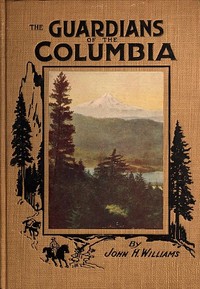
The source record for The Guardians of the Columbia Mount Hood, Mount Adams and Mount St. Helens — Text and Context measures this digital text at 30,228 words, 2 hr 12 min estimated reading time, and 7 detected text sections.
The text analysis averages about 16.9 words per sentence, while the detected sections provide another way to judge how the source is divided.
Project Gutenberg metadata also associates the work with “Columbia River,” connecting these edition facts with the source record’s subject description.
Explore this collection
These alternatives are selected using recorded categories and estimated reading time.
About 132 minutes
Folklore
30,262 recorded words. 0 minutes difference from this book's estimate.
View Gutenberg source #53506About 134 minutes
Folklore
30,670 recorded words. 2 minutes difference from this book's estimate.
View Gutenberg source #51200About 126 minutes
Folklore
28,855 recorded words. 6 minutes difference from this book's estimate.
View Gutenberg source #35928Search stored excerpts and compare books → Choose by your preferences →
Choices use stored catalog measurements. Estimates vary with reading speed. A shared category is a catalog label, not a claim that two books have the same argument or literary quality.
Search reads excerpt text stored with this catalog and links to its associated Gutenberg record. The connection is stored in the site database; this tool does not recheck that every excerpt is word-for-word identical to that external record. Excerpt search does not cover every chapter and does not verify historical publication dates.
Catalog snapshot checked: 2026-09-26. Coverage: 97 public books, 97 available source excerpts.
Calculated from edition completeness, EPUB availability, text structure and catalogue metadata. Not a user rating.
Total of 100 points, scaled to a 2.5-5.0 range. Editions with an empty description or a missing EPUB file are not scored.
Public-domain source text
The source text is kept in the dedicated reader, separate from this catalogue record and its commentary.
John H. Williams opens The Guardians of the Columbia with a poem that casts each peak as a sentinel holding “the menace of the skies,” a tone that persists throughout the text. The book is structured as a series of mountain-by-mountain portraits, each blending geological description, local anecdote, and scenic observation. Williams explicitly aims for accuracy, stating in his foreword that he has “tried to avoid the exaggeration employed in much current writing for the supposed edification of tourists.” The result is a work that moves deliberately between scientific detail—glacial scorings, lava flows, fumaroles—and the human stories that cling to these volcanic forms.
The book’s organization is straightforward: each of the three mountains receives its own extended treatment, framed by a foreword and a brief chapter on forests contributed by H. D. Langille. Williams does not weave the peaks into a single continuous narrative but instead treats them as discrete subjects, allowing the reader to move from Mount Hood’s “pile of volcanic rocks and cinders” to the “comparatively recent lava sheets” around Mount Adams, and then to Mount St. Helens. This compartmentalized structure mirrors the physical isolation of the peaks themselves, each rising separately above the Columbia canyon. The text is further divided by numerous illustrations—more than two hundred, including eight in color—which function as visual chapters, breaking up the prose and offering the reader a pause to study the landscape before returning to Williams’s descriptions.
Two images recur with notable frequency: ice and lava. Williams describes glaciers in precise terms—their “scorings upon the sides of the gorges,” the “mesas of finely ground moraine,” and the “fossil ice lying beneath” the drift. On Mount Hood, he notes the Sandy, Zigzag, and White River glaciers, each ending at different altitudes due to “the smaller reservoirs which feed them” and “the easier grade.” Lava appears as a counterpoint: the “hard basalt” of Mount Adams, the “dikes and streams of basalt” that “hardly beginning to disintegrate” surround the peak. A third recurring motif is the question of volcanic activity. Williams reports steam jets and warm rocks around Crater Rock on Mount Hood, and cites Sylvester’s observation of “dense smoke and steam issuing from Crater Rock by day and a brilliant illumination there at night” in 1907. Yet he hedges, calling this display “the last gasp of a dying monster rather than an awakening toward new life.”
Williams’s narrative movement is predominantly vertical and horizontal—up the slopes and across the valleys. He frequently shifts from a broad view of the Columbia River to a close-up of a specific glacier or lava bed. For instance, he describes the journey to Government Camp, where “one may see abundant evidence of the glacial origin of the Sandy and Zigzag canyons,” then moves to the White River Canyon, “thoroughly explored and described by Prof. Reid.” The text also jumps between mountains: a telephoto view of Mount Adams is taken “from the northeast side of Mount St. Helens, at elevation of 7,000 feet,” linking the two peaks visually. This constant repositioning—from the river to the timber line, from a distant photograph to a detailed geological note—creates a sense of the observer’s own movement through the landscape, as if the reader is accompanying Williams on his survey.
Williams positions himself as a careful observer, one who values accuracy over the “exaggeration” of tourist literature. Yet his prose is not dry; it carries an undercurrent of wonder. He notes that “volcanoes sometimes contradict prophecy,” a phrase that acknowledges the limits of scientific certainty. The foreword reveals his method: he examined “a mass of books, government documents and scientific essays,” finding them “more or less contradictory.” This admission of uncertainty is rare in early twentieth-century nature writing. Williams’s voice is that of a guide who trusts his own eyes and his camera, but who remains aware that the mountains hold secrets—the “fossil ice” beneath the drift, the “steam jets” that may or may not signal a reawakening. The reader is left with the sense that the guardians are not fully known.
Williams’s book rewards a reader who moves slowly, pausing at the illustrations and following the shifts in scale from canyon to crater. The text is best approached not as a continuous story but as a series of closely observed scenes, each anchored to a specific location and moment. The author’s insistence on accuracy—and his willingness to admit contradiction—makes this a more reliable companion than many contemporary accounts. For those interested in the interplay of geology and human perception, The Guardians of the Columbia offers a grounded, unsentimental portrait of three peaks that still stand watch over the river.
I keep returning to John H. Williams’s The Guardians of the Columbia—those old sentinels feeling somehow watchful, patient, unspeaking. It drifted into my hands again this week, and I thought of how those peaks hold their secrets, the way certain stories do. There’s a quiet echo in Wigwam wonder tales — Inside the Classic, a softer kind of guarding, wrapped in older voices.
Save your reaction, strongest insight, and memorable passage.