About 259 minutes
Maugis, ye sorcerer — Inside the Classic
Folklore
59,454 recorded words. 4 minutes difference from this book's estimate.
View Gutenberg source #76929
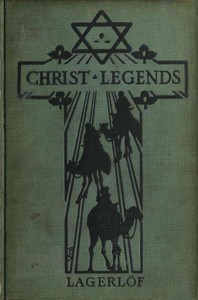
Christ Legends — Story, Setting & Ideas can be approached with a clearer sense of reading commitment from its source measurements: 58,424 words, 4 hr 15 min estimated reading time, and 7 detected text sections.
The text analysis averages about 17.6 words per sentence, while the detected sections provide another way to judge how the source is divided.
Project Gutenberg metadata also associates the work with “Short stories,” connecting these edition facts with the source record’s subject description.
Explore this collection
These alternatives are selected using recorded categories and estimated reading time.
About 259 minutes
Folklore
59,454 recorded words. 4 minutes difference from this book's estimate.
View Gutenberg source #76929About 266 minutes
Folklore
61,013 recorded words. 11 minutes difference from this book's estimate.
View Gutenberg source #46422About 266 minutes
Folklore
61,002 recorded words. 11 minutes difference from this book's estimate.
View Gutenberg source #50292Search stored excerpts and compare books → Choose by your preferences →
Choices use stored catalog measurements. Estimates vary with reading speed. A shared category is a catalog label, not a claim that two books have the same argument or literary quality.
Search reads excerpt text stored with this catalog and links to its associated Gutenberg record. The connection is stored in the site database; this tool does not recheck that every excerpt is word-for-word identical to that external record. Excerpt search does not cover every chapter and does not verify historical publication dates.
Catalog snapshot checked: 2026-09-26. Coverage: 97 public books, 97 available source excerpts.
Calculated from edition completeness, EPUB availability, text structure and catalogue metadata. Not a user rating.
Total of 100 points, scaled to a 2.5-5.0 range. Editions with an empty description or a missing EPUB file are not scored.
Public-domain source text
The source text is kept in the dedicated reader, separate from this catalogue record and its commentary.
The collection opens not with a biblical scene but with a five-year-old’s memory of loss: the grandmother who “used to sit every day on the corner sofa” and tell stories has died, and with her the door to “a whole beautiful, enchanted world” is closed. Only decades later, after gathering legends in the Orient, does the narrator set down what she heard. This framing establishes storytelling itself as the subject—the act of passing on tales that are “as true as that I see you and you see me.” The legends that follow are not doctrinal retellings but folk imaginings, shaped by Lagerlöf’s attention to sensory detail: the scent of budding leaves under a veiled sky, the buzzing of gnat-like instruments, the sight of a mountain city “magnified a thousand-fold” by tents and pilgrims.
The opening section, “The Holy Night,” is less a Nativity story than a meditation on memory and narrative inheritance. The grandmother’s death is described through concrete, child-sized details: the empty corner sofa, the long black casket that “shut up” the stories and songs, the gradual forgetting as children learn to play with dolls. Lagerlöf uses repetition—“I remember,” “I recollect”—to mimic the way early memories surface in fragments. The refrain “It blows cold, cold weather at sea” from a forgotten song hints at a wider oral tradition. This frame colors every subsequent legend: the tales are presented as fragile, handed-down things, not scripture. The narrator’s claim that she can recall only one story fully—the one about Jesus’ birth—underscores the selectivity of memory and the way a single tale can stand for a lost world.
In “The Emperor’s Vision” and later sections, Lagerlöf repeatedly stages large-scale movements: pilgrims streaming toward Jerusalem, the Holy Family traveling through Egypt, crowds gathering for festivals. These processions are described with a painter’s eye for mass and color. The old woman Faustina, riding to Jerusalem, sees “an unbroken sea of white robes, of songs, of holiday cheer” flowing along rock-heights. The atmosphere is often hushed, the sun veiled by a “thin grayish-white mist” that dampens brilliance and makes scents linger. This veiled light recurs—in the “veiled sky” of the festival day, in the kerchief of Saint Veronica—and creates a sense of sacred suspension. Movement is not hurried but solemn; even the instruments produce tones “like the buzzing of gnats, or grasshoppers’ piping,” blending human noise into the natural world.
Alongside the grand processions, Lagerlöf places quiet, enclosed spaces: the grandmother’s room with its corner sofa, the stable of the Nativity, the carpenter’s home in Nazareth. These interiors are where the divine becomes tangible. In “The Holy Night,” the grandmother’s storytelling creates a protected world; in “The Flight into Egypt,” the family’s journey is punctuated by moments of rest and encounter. The domestic scale allows Lagerlöf to focus on small, telling gestures—a hand laid on a child’s head, the knitting of a stocking. The contrast between the vast, crowded landscapes and these intimate pockets of stillness gives the collection its distinctive rhythm. The divine is not found in temples alone but in the ordinary spaces where stories are told and received.
Several images thread through the legends, binding them together. Light appears in various forms: the “snow-white hair” of the grandmother, the veiled sun, the jeweled coronet of Jerusalem. The kerchief of Saint Veronica, which bears the imprint of Christ’s face, is the most explicit example of a cloth that holds a sacred trace. But veils and coverings recur more subtly—the mist that “reminded one of Night’s rest and calm,” the long black casket that shuts away stories, the tents that bedeck the hills. These images suggest that the sacred is often partially hidden, glimpsed through a covering. The grandmother’s phrase “as true as that I see you and you see me” implies that seeing is believing, but the veils remind us that vision is never complete. The legends themselves are a kind of kerchief, preserving an impression of something once present.
Readers approaching Christ Legends should attend to the interplay between the frame story and the tales themselves. The grandmother’s death is not merely a sentimental preface; it establishes that these are stories about the loss and recovery of narrative. Lagerlöf’s prose rewards attention to recurring motifs—veiled light, processions, domestic interiors—that create a cohesive imaginative world. The legends do not aim for historical accuracy but for a folkloric truth, one that feels “as true” as the act of telling. Let the rhythm of the crowds and the stillness of the corner sofa guide your reading.
I found myself drifting back to the grandmother’s hush in Christ Legends, that patient way she unfolded the world’s oldest story. It made me recall a quieter, stranger volume I once kept by the window, Nightmare Tales — Reading Notes. There’s something alike in how both hold darkness and light, the way a curtain part, briefly, before closing again.
Answer a few questions and save a private reflection on this device.