About 53 minutes
The Story of the Other Wise Man — Story, Setting & Ideas
Folklore
12,170 recorded words. 1 minutes difference from this book's estimate.
View Gutenberg source #10679
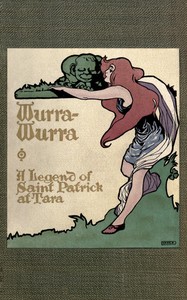
Wurra-Wurra — A Closer Reading can be approached with a clearer sense of reading commitment from its source measurements: 11,953 words, 52 min estimated reading time, and 6 detected text sections.
The text analysis averages about 23.4 words per sentence, while the detected sections provide another way to judge how the source is divided.
Project Gutenberg metadata also associates the work with “Patrick, Saint, 373?-463? -- Legends,” connecting these edition facts with the source record’s subject description.
Explore this collection
These alternatives are selected using recorded categories and estimated reading time.
About 53 minutes
Folklore
12,170 recorded words. 1 minutes difference from this book's estimate.
View Gutenberg source #10679About 42 minutes
Folklore
9,607 recorded words. 10 minutes difference from this book's estimate.
View Gutenberg source #68201About 64 minutes
Folklore
14,494 recorded words. 12 minutes difference from this book's estimate.
View Gutenberg source #66884Search stored excerpts and compare books → Choose by your preferences →
Choices use stored catalog measurements. Estimates vary with reading speed. A shared category is a catalog label, not a claim that two books have the same argument or literary quality.
Search reads excerpt text stored with this catalog and links to its associated Gutenberg record. The connection is stored in the site database; this tool does not recheck that every excerpt is word-for-word identical to that external record. Excerpt search does not cover every chapter and does not verify historical publication dates.
Catalog snapshot checked: 2026-09-26. Coverage: 97 public books, 97 available source excerpts.
Calculated from edition completeness, EPUB availability, text structure and catalogue metadata. Not a user rating.
Total of 100 points, scaled to a 2.5-5.0 range. Editions with an empty description or a missing EPUB file are not scored.
Public-domain source text
The source text is kept in the dedicated reader, separate from this catalogue record and its commentary.
The narrative voice of 'Wurra-Wurra' immediately establishes a distinct Hiberno-English dialect, with phrases like “whin the good Patrick of Armagh slept with wan eye open” and “a bunch of haythin magicians.” This voice, attributed to a storyteller rather than an omniscient narrator, frames the legend as an oral tale. The opening excerpt introduces the central conflict: Patrick’s mission to convert King Laeghaire, opposed by Druids Lochru, Caplait, and Lucat-Moel. The prose is brisk and comic, with Patrick “goin’ easy like” and the Druids clinging to their jobs. The first miracle—Patrick sinking the idol Cromm Cruach and its twelve smaller idols into the plain—sets a pattern of physical, almost slapstick divine intervention.
The text is written in a sustained stage-Irish dialect, with phonetic spellings such as “whin,” “an’,” “hild,” “makin’,” and “iloquence.” This choice signals that the story is being told, not read silently. The narrator uses colloquial interjections (“sure a caution,” “indade”) and addresses the reader directly, as in “’Twas a miracle the like of wh...” The dialect is consistent across all excerpts, suggesting the entire work maintains this oral quality. Readers should be prepared for a voice that is playful and rhythmic, occasionally obscuring meaning but rewarding those who read aloud.
The excerpts reveal a pattern of discrete episodes, each centered on a confrontation or miracle. The opening episode features Patrick sinking Cromm Cruach. Later, Keth Mac Maragh shatters the idol Wurra-Wurra with a handstone, and the wizard Lochru flees “shriekin’ up the valley.” Each episode has a clear setup, action, and aftermath, often with a moral or comic twist. The illustrations listed—such as “Keth recites the Brehon Law” and “Dubthach, the Royal Shanachy, driving home the price of his poems”—suggest further episodes involving law and poetry. This structure makes the legend easy to follow in short sittings, as each chapter likely resolves its own conflict.
Two physical objects recur across the excerpts: Keth’s handstone and the grotto of Wurra-Wurra. The handstone is first mentioned in an illustration caption (“Keth, Patrick’s Strong Man, describing to Finola the virtues of his handstone”) and later becomes the weapon that shatters the idol. The grotto is the setting for the idol’s destruction and a place where “poor loonatics” come to leave their troubles. Finola’s message from Patrick reveals that the grotto is “an instrumint of God, not yet to be destroyed,” complicating Keth’s violent act. These motifs tie the episodes together, giving the reader physical anchors in the narrative.
The middle excerpt introduces Keth Mac Maragh and Finola, whose relationship drives the plot beyond Patrick’s miracles. Keth is a strong man prone to violence (“spill thy rotten brains”), while Finola is a messenger who “flung hersilf upon his neck.” Their dialogue reveals tension: Keth dissembles about destroying the idol, and Finola prays to Wurra-Wurra, prompting Keth’s rebuke “Lave off your heretical supplications.” The later excerpt shows Finola delivering Patrick’s command to spare the idol, forcing Keth to choose between obedience and his own judgment. This personal conflict adds depth to the legend, suggesting that the story is as much about human relationships as about saintly power.
Readers new to 'Wurra-Wurra' should attend to the interplay between the comic dialect and the serious themes of conversion and obedience. The legend does not present Patrick as a solemn figure but as a strategist working through agents like Keth. The recurring motifs of the handstone and grotto reward attention, as they accumulate meaning across episodes. The incomplete excerpts leave open questions about Finola’s role and the ultimate fate of the idol, inviting the reader to discover how the legend resolves its tensions between destruction and preservation.
I remember sitting with Wurra-Wurra one rainy afternoon, struck by how its tangled dialects and recurring motifs felt less like a map than a tidepool. Patrick’s stubborn refrain, always returning. That quiet patience also lives in The Dolphin in History — Key Ideas to Explore, where an animal’s ancient grace drifts beneath human tales. Both books ask us to listen slowly, and I find that kinship deeply comforting.
Use these questions to collect your thoughts before moving on.