About 38 minutes
Cuban Folk-Lore — Reading Notes
Folklore
8,681 recorded words. 4 minutes difference from this book's estimate.
View Gutenberg source #51040
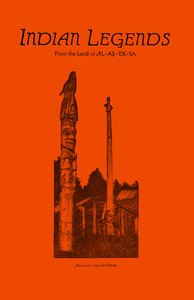
This digital edition of Indian Legends from the land of Al-ay-ek-sa — A Reader’s Guide is described by source-level measurements including 9,607 words, 42 min estimated reading time, and 2 detected text sections.
The text analysis averages about 20.3 words per sentence, while the detected sections provide another way to judge how the source is divided.
Project Gutenberg metadata also associates the work with “Indians of North America -- Alaska -- Folklore,” connecting these edition facts with the source record’s subject description.
Explore this collection
These alternatives are selected using recorded categories and estimated reading time.
About 38 minutes
Folklore
8,681 recorded words. 4 minutes difference from this book's estimate.
View Gutenberg source #51040About 37 minutes
Folklore
8,316 recorded words. 5 minutes difference from this book's estimate.
View Gutenberg source #49278About 52 minutes
Folklore
11,953 recorded words. 10 minutes difference from this book's estimate.
View Gutenberg source #75537Search stored excerpts and compare books → Choose by your preferences →
Choices use stored catalog measurements. Estimates vary with reading speed. A shared category is a catalog label, not a claim that two books have the same argument or literary quality.
Search reads excerpt text stored with this catalog and links to its associated Gutenberg record. The connection is stored in the site database; this tool does not recheck that every excerpt is word-for-word identical to that external record. Excerpt search does not cover every chapter and does not verify historical publication dates.
Catalog snapshot checked: 2026-09-26. Coverage: 97 public books, 97 available source excerpts.
Calculated from edition completeness, EPUB availability, text structure and catalogue metadata. Not a user rating.
Total of 100 points, scaled to a 2.5-5.0 range. Editions with an empty description or a missing EPUB file are not scored.
Public-domain source text
The source text is kept in the dedicated reader, separate from this catalogue record and its commentary.
Harriet Rossiter's Indian Legends from the land of Al-ay-ek-sa opens with a creation-flood narrative that establishes a pattern of displacement and survival. The storyteller explains how the Great Spirit caused waters to rise, leaving only a few canoe-borne survivors to repopulate the land. This origin story also introduces the clan system: a stranger may enter any lodge before which stands a totem bearing his family crest, and members of the same clan—Raven or Eagle—may not intermarry. The excerpts show a collection that moves between mythic time and recent history, with the storyteller's voice bridging both.
The excerpts present a named Story Teller who addresses an audience of old men grunting assent and young men listening in silence. This framing device recurs: the storyteller points to a totem pole, describes a battle, or gestures toward the village of Saxman. His speech is direct, often beginning with “My people” and ending with a sigh or a pointed moral. The narrative voice is not omniscient but personal—he recounts wars with the Thlinget clan at Sheet-kah and the Tsimpseans, and he remembers Chief Nah-goot killed by Schook-klatch. Rossiter preserves the rhythm of oral delivery, with short declarative sentences and repeated phrases like “fight, fight, all the time fight.” The storyteller’s presence gives the legends a living context, as if the reader is sitting at the campfire.
Water is a constant presence: the flood that “blot out all the land,” canoes drifting until they “grated and came to rest on dry land,” and the Sheet-kah Indians paddling “as far south as Dixon’s Entrance.” The canoes themselves are described with material specificity—made of “rotten spruce logs, which they hollowed out with sharp stones,” some holding thirty or forty people. Movement between islands and along the coast defines the geography of conflict. The Kok-wan-tans wait on a low, sandy island “level as the palm of my hand,” where there are no springs and little wood. These images of travel, refuge, and siege create a landscape shaped by water and the constant possibility of arrival or escape.
The opening legend establishes that a member of the Raven clan may not marry a raven, nor an eagle an eagle, because they belong to the same family. This prohibition is tied to the crest system: a stranger may enter any lodge before which stands a totem surmounted by his family crest, and he is given food and shelter. In the days when slaves were plentiful, an Indian chief would free any prisoner whose crest matched his own clan, even if their language was unknown. The crests thus function as a code of kinship and hospitality that transcends speech. Later, the storyteller identifies himself as of the Raven clan, and the Lincoln totem pole is carved by a Thlinget carver in honor of the great white chief. The crests link the legends to a living social structure.
The excerpts show a clear historical pivot: Captain Cook is the first Pale Face the people had seen, and later the “great white chief in Washington” sends soldiers to enforce peace. The storyteller describes how his people now live like white brothers, with children going to school and fine fishing boats. He points to a pier and hopes for an Indian village with canneries and sawmills, where “the Indian will no longer be a child. He will be a man.” Yet the ending is sad: “the young look not with the eyes of the old. I dream, but my dreams may not come true.” This tension between assimilation and loss runs through the collection, giving the legends an elegiac undertone.
Rossiter’s collection does not present legends as timeless artifacts but as stories told by a specific narrator at a moment of cultural change. Readers should attend to the storyteller’s asides and gestures—they reveal as much about the early twentieth-century context as about the ancient tales. The recurring images of water, crests, and the white man’s arrival form a coherent pattern that rewards careful reading across the brief text.
Rossiter’s storyteller keeps one eye on the fading fires, and I find myself holding that same ache when I set her book down—the weight of what’s remembered against what’s lost. That quiet tension lingers, too, in the older voices gathered in Traditions of the North American Indians, Vol. 2 — A Reader’s Guide. Different tribes, same hush before the telling. A small comfort, that continuity.
Capture what you thought, learned, and would like to remember.