About 64 minutes
Joseph and His Brethren — Themes and Context
Folklore
14,494 recorded words. 4 minutes difference from this book's estimate.
View Gutenberg source #66884
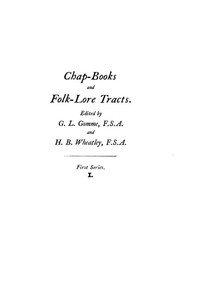
Before opening The History of Thomas Hickathrift — Inside the Classic, the edition data offers a quick orientation: 15,502 words, 1 hr 8 min estimated reading time, and 5 detected text sections.
The text analysis averages about 30.2 words per sentence, while the detected sections provide another way to judge how the source is divided.
Project Gutenberg metadata also associates the work with “Thomas Hickathrift,” connecting these edition facts with the source record’s subject description.
Explore this collection
These alternatives are selected using recorded categories and estimated reading time.
About 64 minutes
Folklore
14,494 recorded words. 4 minutes difference from this book's estimate.
View Gutenberg source #66884About 81 minutes
Folklore
18,446 recorded words. 13 minutes difference from this book's estimate.
View Gutenberg source #76997About 53 minutes
Folklore
12,170 recorded words. 15 minutes difference from this book's estimate.
View Gutenberg source #10679Search stored excerpts and compare books → Choose by your preferences →
Choices use stored catalog measurements. Estimates vary with reading speed. A shared category is a catalog label, not a claim that two books have the same argument or literary quality.
Search reads excerpt text stored with this catalog and links to its associated Gutenberg record. The connection is stored in the site database; this tool does not recheck that every excerpt is word-for-word identical to that external record. Excerpt search does not cover every chapter and does not verify historical publication dates.
Catalog snapshot checked: 2026-09-26. Coverage: 97 public books, 97 available source excerpts.
Calculated from edition completeness, EPUB availability, text structure and catalogue metadata. Not a user rating.
Total of 100 points, scaled to a 2.5-5.0 range. Editions with an empty description or a missing EPUB file are not scored.
Public-domain source text
The source text is kept in the dedicated reader, separate from this catalogue record and its commentary.
The earliest surviving chapbook of The History of Thomas Hickathrift, printed around 1660–1690, presents a hero whose strength and size are matched only by the story’s reliance on concrete geographical anchors. The editor, George Laurence Gomme, notes that the tale “belongs to the great Fen District” and that the hero “lived in the marsh of the Isle of Ely” and worked as “a brewer’s man” at Lyn. This specificity roots the fantastic events—giants, footballs kicked out of sight, and single-handed battles—in a recognizable landscape. The narrative structure divides into two parts, the second being a later addition, but the first part maintains a clear episodic rhythm: each encounter (with a giant, football players, thieves, a tinker) follows a pattern of provocation, physical escalation, and resolution through brute force or cleverness.
Gomme’s introduction explicitly separates the chapbook into an early first part and a later second part, the latter “evidently a printer’s or a chapman’s addition.” The first part, from the Pepysian Library, is the focus of this edition. Its structure is additive: Tom Hickathrift begins as a poor man, gains wealth and status after killing a giant, and then engages in a series of loosely connected adventures. The second part, from a 1780 British Museum copy, continues the pattern but with less coherence. This division matters because the first part’s episodes—the giant fight, the football kick, the robbery, the tinker encounter—are self-contained and could be rearranged without breaking the narrative. The later addition tries to extend the hero’s career but lacks the original’s tight focus on physical prowess and local fame.
Three images recur with emblematic force. The giant is the initial obstacle, but after his defeat, Tom’s strength is demonstrated through everyday objects: a football that he kicks so hard it disappears (“they never found their ball no more”), and a “spar which belonged to a house that was blown down” used as a weapon against a mob. These objects are not magical; they are mundane items repurposed to show Tom’s superhuman capacity. The giant himself is described in physical terms—his size, his club—but the story spends more time on Tom’s reaction to him than on the giant’s character. The football episode, in particular, shifts the tone from heroic to almost comic, as Tom’s kick ends a game and provokes a brawl. This blend of the extraordinary and the ordinary is a hallmark of the chapbook’s style.
The narrative moves between domestic settings (Tom’s home, his mother Jane) and public spaces (the football field, the road, the forest). After killing the giant, Tom “kept men and maids, and lived most bravely” and built a church, but he soon leaves this settled life to attend “cudgel-play, bear-baiting, football play.” The journey is always outward: he rides to a football match, meets thieves on the road home, and later wanders into the forest where he encounters a tinker. Each scene begins with a departure from home and ends with a return, often with a humorous report to his mother. This circular movement reinforces the idea that Tom’s adventures are interruptions to a stable domestic life, not a quest. The road and forest are liminal spaces where his strength is tested, but the home remains a constant reference point.
The narrator speaks in a direct, colloquial voice, addressing the reader with phrases like “to tell the chief I shall do my endeavour” and “which is too tedious to write in this column.” The tone is informal and occasionally self-deprecating, as when the narrator admits that Tom’s later good deeds are “too tedious” to list. Dialogue is minimal and functional: the thieves say “Stand and deliver,” and Tom replies with a challenge. The narration favors action over introspection, describing blows and outcomes rather than motives. This register suits the chapbook’s audience—readers seeking entertainment rather than moral instruction. The editor’s introduction, by contrast, is scholarly and cautious, noting that “there does not seem to be the slightest evidence” for antiquarian identifications of Tom with historical figures. The contrast between the academic frame and the folk tale’s plain style is a notable feature of this edition.
Readers approaching The History of Thomas Hickathrift should attend to how the chapbook balances the fantastic with the familiar. The hero’s strength is never explained; it is simply assumed. The story’s power lies in its episodic structure and its reliance on physical objects—a football, a spar, a giant’s club—to drive the plot. The editor’s notes provide context without overinterpreting, leaving the tale to speak for itself. This edition preserves the raw energy of a folk tradition that values action over character development and local detail over universal themes.
That rainy afternoon, I kept returning to Hickathrift’s quiet transitions—alehouse to battlefield, home to fen—and wondered how other far-off stories map their own small geographies. My mind drifted to a guide for Laos folk-lore, where rivers and village thresholds carry weight the same way. Laos Folk-Lore of Farther India — A Reader’s Guide sat unopened for weeks, until the rain stopped and I picked it up almost by accident.
Capture what you thought, learned, and would like to remember.