About 103 minutes
An Essence of the Dusk, 5th Edition — Reading Companion
Folklore
23,463 recorded words. 1 minutes difference from this book's estimate.
View Gutenberg source #11499
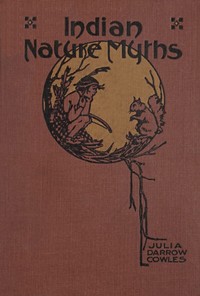
The catalog record for Indian Nature Myths — Inside the Classic provides practical reading context through 23,260 words, 1 hr 42 min estimated reading time, and 26 detected text sections.
The text analysis averages about 17.4 words per sentence, while the detected sections provide another way to judge how the source is divided.
Project Gutenberg metadata also associates the work with “Indians of North America -- Folklore -- Juvenile literature,” connecting these edition facts with the source record’s subject description.
Explore this collection
These alternatives are selected using recorded categories and estimated reading time.
About 103 minutes
Folklore
23,463 recorded words. 1 minutes difference from this book's estimate.
View Gutenberg source #11499About 108 minutes
Folklore
24,835 recorded words. 6 minutes difference from this book's estimate.
View Gutenberg source #35909About 89 minutes
Folklore
20,276 recorded words. 13 minutes difference from this book's estimate.
View Gutenberg source #58939Search stored excerpts and compare books → Choose by your preferences →
Choices use stored catalog measurements. Estimates vary with reading speed. A shared category is a catalog label, not a claim that two books have the same argument or literary quality.
Search reads excerpt text stored with this catalog and links to its associated Gutenberg record. The connection is stored in the site database; this tool does not recheck that every excerpt is word-for-word identical to that external record. Excerpt search does not cover every chapter and does not verify historical publication dates.
Catalog snapshot checked: 2026-09-26. Coverage: 97 public books, 97 available source excerpts.
Calculated from edition completeness, EPUB availability, text structure and catalogue metadata. Not a user rating.
Total of 100 points, scaled to a 2.5-5.0 range. Editions with an empty description or a missing EPUB file are not scored.
Public-domain source text
The source text is kept in the dedicated reader, separate from this catalogue record and its commentary.
Julia Darrow Cowles's Indian Nature Myths (1918) collects twenty-six tales from various North American tribes, each explaining a natural phenomenon. The stories share a consistent structural pattern: a specific observation about nature—why the aspen leaves tremble, how mosquitoes came to be—is answered by a narrative that moves from a human or animal predicament to a transformation. Cowles frames many tales with a grandmother addressing Red children, creating a layered telling that distances the reader from the original oral context while preserving a sense of intimate instruction. The preface explicitly states the goal of showing how early Red Men accounted for natural phenomena, and the stories themselves repeatedly hinge on moments of sudden change—a dart into a hollow log, a binding with rawhide, a refusal to burn a monster's body—that produce lasting effects in the natural world.
Nearly every myth in the collection culminates in a physical transformation that fixes a natural feature or creature. In “How Birds and Fairies Came to Be,” the old man Osseo darts through a hollow log and emerges young and strong; later, the sisters are changed into birds and fairies. The story of the great Mosquito ends not with the monster's death but with the emergence of small stinging flies from its unburned body. “Why the Aspen Leaves Are Never Still” likely follows a similar pattern, as do tales explaining the origin of the arbutus, the violet, and the hummingbird. These transformations are rarely punitive; they often reward virtue or explain a perceived flaw in nature as the residue of a past event. Cowles emphasizes the moment of change with vivid physical detail—the binding of wings, the emergence of insects—grounding the mythic in the tangible.
The myths frequently depict a porous boundary between human society and the natural landscape. Characters move from village to mountain, from lodge to hollow log, from human form to bird or insect. In the mosquito tale, the young brave goes to a bare place on the mountain side, sings his death-song, and waits; the monster descends from the sky. The story of Osseo begins in a father's lodge, proceeds along a path, and passes a hollow log that serves as a threshold. This spatial movement mirrors the narrative movement from ordinary life to extraordinary event. Cowles often marks these transitions with a change in verb tense or a shift from dialogue to description, signaling that the reader is entering a different register of reality. The natural world is not a backdrop but an active participant, and the boundary between human and non-human is crossed as easily as a log is passed through.
Cowles consistently frames her tales with an explicit narrator addressing an audience. The preface instructs adults to explain to children that these stories grew out of early peoples' imaginings. Several myths open with phrases like “Now I will tell you a story of their beginning, as the Indian grandmothers tell it to the Red children.” This framing creates a double distance: the reader hears a story that is already being retold by a grandmother to children, and Cowles is retelling it again for a print audience. The effect is to emphasize the oral, generational transmission of the myths while also asserting a pedagogical purpose. The grandmother figure appears as a wise, patient voice, and the stories often end with a return to the present—the aspen still trembles, mosquitoes still bite—linking the mythic past to the reader's own experience. This structure invites the reader to see themselves as the next link in the chain of listeners.
Despite the variety of tribes represented, certain images recur across the collection. The moaning of the wind, the whispering of leaves, and the buzzing of insects are described in similar terms. In the mosquito myth, the monster arrives with “a terrible cry” and “enormous wings outstretched”; the small flies that later emerge “bit and stung.” Sound often signals a transformation or a warning. The preface itself mentions “the moaning of the wind, the whispering of the leaves” as phenomena the myths explain. Cowles also uses motion verbs repeatedly: dart, fly, spring, bind. Characters are rarely static; they move quickly between states—from old to young, from human to bird, from life to death. This kinetic quality gives the prose a rhythmic urgency, even in the more explanatory passages. The illustrations by Dorothy Dulin, though not described in the excerpts, likely capture these moments of motion and transformation, reinforcing the visual imagination of the tales.
Readers approaching Indian Nature Myths will find a collection that rewards attention to structure and repetition. The myths are best read not as isolated stories but as variations on a few core patterns: a problem in nature is traced to a past event, a transformation occurs, and the present world is explained. Cowles's framing devices and her careful movement between human and natural worlds create a consistent tone that is both instructive and poetic. Noticing how each tale builds toward its explanatory moment—and how the same images of sound, motion, and change recur—will deepen the reader's appreciation of these retellings as a unified work of folklore adaptation.
There’s something tender in how Cowles lets the world shift between human and tree, bird and star—as if transformation were just a slower kind of remembering. That same quiet ache lingers in the old Babylonian tales, where gods and mortals trade places like distant kin. I keep thinking about that threshold, and Istar of Babylon: A Phantasy — Background and Themes brought it back, softly.
Use these questions to collect your thoughts before moving on.