About 118 minutes
Wigwam Evenings: Sioux Folk Tales Retold — Reading Companion
Folklore
27,108 recorded words. 2 minutes difference from this book's estimate.
View Gutenberg source #28099
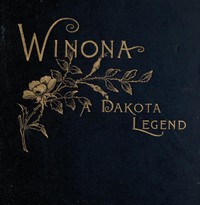
This digital edition of Winona, a Dakota Legend; and Other Poems — A Reader’s Guide is described by source-level measurements including 27,536 words, 2 hr estimated reading time, and 6 detected text sections.
The text analysis averages about 25.4 words per sentence, while the detected sections provide another way to judge how the source is divided.
Project Gutenberg metadata also associates the work with “Dakota Indians -- Folklore,” connecting these edition facts with the source record’s subject description.
Explore this collection
These alternatives are selected using recorded categories and estimated reading time.
About 118 minutes
Folklore
27,108 recorded words. 2 minutes difference from this book's estimate.
View Gutenberg source #28099About 123 minutes
Folklore
28,201 recorded words. 3 minutes difference from this book's estimate.
View Gutenberg source #35564About 126 minutes
Folklore
28,855 recorded words. 6 minutes difference from this book's estimate.
View Gutenberg source #35928Search stored excerpts and compare books → Choose by your preferences →
Choices use stored catalog measurements. Estimates vary with reading speed. A shared category is a catalog label, not a claim that two books have the same argument or literary quality.
Search reads excerpt text stored with this catalog and links to its associated Gutenberg record. The connection is stored in the site database; this tool does not recheck that every excerpt is word-for-word identical to that external record. Excerpt search does not cover every chapter and does not verify historical publication dates.
Catalog snapshot checked: 2026-09-26. Coverage: 97 public books, 97 available source excerpts.
Calculated from edition completeness, EPUB availability, text structure and catalogue metadata. Not a user rating.
Total of 100 points, scaled to a 2.5-5.0 range. Editions with an empty description or a missing EPUB file are not scored.
Public-domain source text
The source text is kept in the dedicated reader, separate from this catalogue record and its commentary.
E. L. Huggins's Winona, a Dakota Legend; and Other Poems opens with a proem that immediately signals a shift in perspective: “How changed, fair Minnetonka, is thy face / Since first I saw thee in thy pristine grace.” The apostrophe to a specific lake grounds the poem in a recognizable Dakota landscape, while the contrast between past and present introduces a note of loss that recurs throughout the collection. Huggins, an army captain, draws on his likely firsthand experience of the region, but the poem’s voice remains that of an outsider reflecting on change.
The proem’s address to Minnetonka establishes a pattern in which natural features carry emotional weight. The lake is personified as “fair” and its “pristine grace” is mourned, suggesting that the speaker’s connection to the land is both aesthetic and elegiac. This technique recurs in the title poem, where the Dakota legend is framed through descriptions of the environment—prairie, river, and sky—that serve as backdrops for human action. Huggins avoids detailed ethnographic description, instead using landscape to evoke mood. For example, the narrative’s setting is often sketched in broad strokes, with specific place names (Minnetonka, the Mississippi) anchoring the story in a real geography. The effect is to make the legend feel both local and universal, though the excerpts do not reveal how deeply the poem engages with Dakota cultural specifics.
In the excerpts from Winona, dialogue is sparse, but when it appears, it carries the narrative’s emotional weight. The poem’s characters speak in a formal, slightly archaic English that contrasts with the natural setting. For instance, a line like “Proud, but tender, pressed to mine” suggests a lover’s address, but the diction is more literary than colloquial. This choice distances the reader from the characters, making them figures in a legend rather than realistic people. Huggins may have been constrained by the poetic conventions of his time, or he may have deliberately elevated the language to match the legendary tone. The result is a voice that feels mediated, as if the poet is translating not just words but an entire cultural perspective into a nineteenth-century American idiom.
The collection’s “Translations and Imitations” section reveals Huggins’s range of influences and his approach to adapting foreign texts. Poems after Hugo, Béranger, and De Musset show a preference for French Romantic and post-Romantic verse, with themes of lost love, time, and nature. In “The Bird I Wait For” (after Moreau), the refrain “Alas, the bird I wait for comes no more” builds a cumulative sense of longing. Huggins’s diction here is more direct than in the Dakota poem, with concrete images like “Dead, buried suns of former years arise” and “The lark pours forth his liquid flood of song.” The translations often employ regular rhyme and meter, suggesting Huggins valued formal fidelity. However, the choice to include these European poems alongside a Dakota legend creates a juxtaposition that invites comparison between cultural traditions, even if the excerpts do not show explicit connections.
Across the excerpts, certain motifs recur: roses, birds, and the passage of time. In “The Roses of Saadi” (after Desbordes-Valmore), roses fall into the sea, leaving only fragrance—a metaphor for memory and loss. “Rose-Buds” (after Béranger) directly addresses the buds, warning of time’s frost. These floral images echo the proem’s lament for lost beauty. Birds appear in multiple poems: the eagle, lark, martin, and the awaited bird of “The Bird I Wait For.” Each bird represents a different aspect of freedom or desire, and their repeated appearance creates a thematic thread. Structurally, Huggins often uses a refrain or repeated line to unify a poem, as in “The Bird I Wait For” and “Rose-Buds.” This technique gives the translations a song-like quality, while the Dakota legend, though not excerpted fully, likely employs narrative verse without such refrains, marking a formal distinction between the two sections.
Huggins’s collection offers a curious blend of local legend and European translation, united by a consistent interest in loss, memory, and the natural world. Readers attentive to diction will notice how the poet shifts register between the Dakota narrative and the French imitations, sometimes adopting a more ornate style, sometimes a plainer one. The excerpts suggest that Huggins was a careful craftsman who valued formal structure, but the full poem Winona may reveal how he handled the challenge of representing an Indigenous story in verse. Approach the text as a document of its time, shaped by both personal experience and literary convention.
Sometimes, rereading Huggins’s proem, where the prairie feels both immense and quietly watchful, I found myself setting it down. It isn’t the legend itself, but the tender way he lets the landscape breathe. That patience reminds me of how The Dolphin in History — Key Ideas to Explore treats its own central creature—not as a symbol, but as a neighbor. Both books, in their separate quietudes, simply observe a being sharing our world.
A brief reflection can help important ideas stay with you longer.