
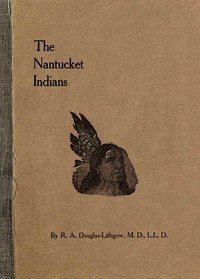
The Nantucket Indians by R. A. Douglas-Lithgow
Picking up 'The Nantucket Indians' feels like opening a time capsule. Douglas-Lithgow, writing in the early 1900s, compiled stories, records, and oral histories to piece together a portrait of the Wampanoag people specific to Nantucket Island.
The Story
The book doesn't follow a single character, but rather tells the collective story of a community. It starts by painting a picture of their life before European contact—their seasonal movements, their skilled craftsmanship with wampum, and their deep understanding of the island's resources. Then, it chronicles the arrival of English settlers in the 1600s. The narrative shows how relations began with land deals and cooperation, especially in the budding whaling industry where Native expertise was invaluable. But it steadily reveals the cracks: devastating epidemics that swept through their villages, the encroachment on their lands, and the gradual absorption of their people into the settler economy and culture, often at the cost of their own traditions. By the 1800s, the distinct Nantucket Indian community had largely faded from view, its members scattered or assimilated.
Why You Should Read It
This book stuck with me because it fills a glaring silence. We hear so much about the mainland colonial experience, but island histories are unique. Douglas-Lithgow's work, though a product of its time, is driven by a clear effort to preserve a narrative that was slipping away. He lists names of sachems (leaders) and traces family lines, giving dignity and individuality to a group often remembered only as a footnote. Reading it, you get a real sense of loss, but also of resilience. These weren't passive victims; they were negotiators, sailors, and survivors adapting to impossible circumstances. It makes you look at the idyllic island of Nantucket and see a completely different, deeper layer of history beneath the cobblestones and grey shingles.
Final Verdict
Perfect for history buffs who enjoy local stories that challenge the big national narratives, and for anyone visiting or curious about New England who wants to understand the full human landscape. Be aware that the writing style is early 20th-century, so it's more formal than a modern pop history book, but its value as a preservation effort is immense. It's a quiet, important book that deserves to be remembered alongside the island it documents.
This work has been identified as being free of known copyright restrictions. Distribute this work to help spread literacy.
Emily Taylor
1 year agoExactly what I was looking for, thanks!
Sarah Lee
8 months agoI wanted to compare this perspective with traditional views, the chapter on advanced strategies offers insights I haven't seen elsewhere. I'll be recommending this to my students and colleagues alike.
Mary Lopez
2 years agoThis is now a staple reference in my professional collection.
Paul Jackson
8 months agoI found the data interpretation to be highly professional and unbiased.









Barbara Williams
3 weeks agoI appreciate how this edition approaches the core problem, the inclusion of diverse viewpoints strengthens the overall narrative. Finally, a source that prioritizes accuracy over hype.