About 208 minutes
The Substance of a Dream — Reading Notes
Folklore
47,754 recorded words. 5 minutes difference from this book's estimate.
View Gutenberg source #20935
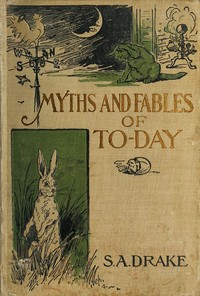
The catalog record for The Myths and Fables of To-Day — Key Ideas to Explore provides practical reading context through 48,866 words, 3 hr 33 min estimated reading time, and 7 detected text sections.
The text analysis averages about 24.9 words per sentence, while the detected sections provide another way to judge how the source is divided.
Project Gutenberg metadata also associates the work with “Folklore,” connecting these edition facts with the source record’s subject description.
Explore this collection
These alternatives are selected using recorded categories and estimated reading time.
About 208 minutes
Folklore
47,754 recorded words. 5 minutes difference from this book's estimate.
View Gutenberg source #20935About 206 minutes
Folklore
47,345 recorded words. 7 minutes difference from this book's estimate.
View Gutenberg source #75212About 222 minutes
Folklore
50,920 recorded words. 9 minutes difference from this book's estimate.
View Gutenberg source #28932Search stored excerpts and compare books → Choose by your preferences →
Choices use stored catalog measurements. Estimates vary with reading speed. A shared category is a catalog label, not a claim that two books have the same argument or literary quality.
Search reads excerpt text stored with this catalog and links to its associated Gutenberg record. The connection is stored in the site database; this tool does not recheck that every excerpt is word-for-word identical to that external record. Excerpt search does not cover every chapter and does not verify historical publication dates.
Catalog snapshot checked: 2026-09-26. Coverage: 97 public books, 97 available source excerpts.
Calculated from edition completeness, EPUB availability, text structure and catalogue metadata. Not a user rating.
Total of 100 points, scaled to a 2.5-5.0 range. Editions with an empty description or a missing EPUB file are not scored.
Public-domain source text
The source text is kept in the dedicated reader, separate from this catalogue record and its commentary.
Drake opens with a pointed epigraph from Acts—'Ye men of Athens, I perceive that in all things ye are too superstitious'—and immediately frames superstition as a 'present, a living, fact' rather than a relic of ignorance. This sets a tone of wry observation rather than antiquarian nostalgia. The book then proceeds through fifteen chapters that taxonomize beliefs by domain: childhood folklore, weather, signs, charms, marriage, omens, haunted places, and more. Drake's method is to cite a belief, often with a local or literary variant, then offer a dry comment or historical parallel. The excerpts reveal a work that is part catalogue, part commentary, and consistently alert to the persistence of these notions in modern life.
The opening chapter, 'A Reckoning with Time,' establishes Drake's dual approach: he treats superstition as both historical phenomenon and contemporary force. He notes that while education has supposedly banished such beliefs, they still 'influenc[e], if not controll[e], the everyday acts of men.' This tension between rationalism and lived practice runs through the entire book. Drake does not simply list superstitions; he often traces them to classical or literary antecedents, as when he quotes Samuel Butler on Augustus putting on his left shoe first. The chapter thus functions as a thesis statement, preparing the reader for a work that is neither purely folkloric nor purely skeptical, but a blend of both.
In 'The Folk-lore of Childhood,' Drake turns to the beliefs that surround early life, though the excerpts do not provide full details. The chapter likely covers nursery rhymes, games, and protective charms for children. Given Drake's method elsewhere, one can expect him to note regional variations and to connect childhood beliefs to older traditions. The brevity of the excerpt here suggests that the chapter may be more descriptive than analytical, but the overall structure of the book—moving from general to specific—implies that childhood lore is treated as a foundational layer of superstition, one that persists into adult life.
The chapter 'Of Evil Omens' is richly represented in the excerpts. Drake catalogs a wide range of unlucky signs: breaking crockery (which portends further breakage), stumbling upstairs, washing hands in the same basin, taking off a ring given by a deceased person, and the 'hoodoo' term from baseball. He often includes a literary or historical reference—for example, Friar Lawrence's line from Romeo and Juliet—and a wry comment, as when he notes that the peacock feather's supposed evil omen has not stopped its use as a mantel ornament. The chapter reveals Drake's interest in the social function of these beliefs, as when he observes that the 'right-foot-foremost' superstition generates 'necessary corollaries' about dressing. The cumulative effect is a portrait of a culture saturated with small, everyday rituals to ward off misfortune.
In 'Of Love and Marriage,' Drake collects beliefs about courtship and weddings. The excerpts mention that getting married before breakfast is considered unlucky, that May is an unlucky month, and that marrying in Lent brings repentance. He quotes Burton's 'Marriage and hanging go by destiny; matches are made in heaven,' which neatly encapsulates the fatalism underlying many such beliefs. Drake's tone here is lightly ironic, as when he suggests that if all times of day are unlucky for marriage, then marriage itself is unlucky—'though it is not believed all married people will cordially subscribe to this heresy.' This chapter, like others, balances ethnographic reporting with a knowing, sometimes humorous, editorial voice.
Drake's book rewards a reader who enjoys the interplay between belief and skepticism. The excerpts show that he is less interested in debunking than in documenting the persistence and variety of superstitions. A first-time reader might profitably attend to the way Drake moves between a reported belief, a literary allusion, and a quiet joke. The work is best approached as a collection of discrete entries rather than a continuous argument; each chapter can stand alone. The illustrations by Frank T. Merrill, though not excerpted here, likely complement the text's tone of amused observation.
That gray afternoon, rain ticking the window, I kept returning to Drake’s patient catalog of folk notions—how a dropped fork meant company, a single magpie meant sorrow. His gentle amusement felt like a warm blanket. Somehow, that quiet surveying of small beliefs drifted me toward a different kind of waiting, one gentler and more profound: The Story of the Other Wise Man — Story, Setting & Ideas. I finished both before dusk, strangely comforted.
Your answers remain private and are stored only in this browser.